My Blog List

Look for a pattern-Journal#10

Question


continue these numerical sequences.

1,4,7,10,13,     ,       ,       .


19,20,22,25,29,        ,         ,          .                                 


2,6,18,54,       ,          ,          .

Solution:


1st.Understand the problem.
Students should realize that they are to be able to notice a pattern.

2nd.Devise a plan.
Look for a pattern.


3rd.Carry out the plan.

1,4,7,10,13,    ,      ,       .
Hopefully the students will notice "add three to the previous term to generate the next term.
The answer is 1,4,7,10,13,16,19,22.

19,20,22,25,29,    ,      ,      .
The patter  is add one to the previous term,then add two to that term,then add three....
The answer is 19,20,22,25,29,34,40,47.


2,6,18,54,    ,        ,        .
The pattern is to multiply the previous term by three to generate the next term.
The answer is 2,6,18,54,162,486,1458.


4th Look back
Ask if students saw other patterns ?Did they have different interpretation of the patterns?

Calculator-Journal #9


When to Use a Calculator


The National Council of Teachers of Mathematics encourages the use of calculators in the middle grades. Adults frequently use calculators to figure their grocery bills or to balance the checkbook. Most middle-grade students have access to them. With these facts in mind, under what circumstances should teachers make the decision to use calculators with their students? The following guidelines are helpful in answering this question.

A student could be allowed to use the calculator in the following situations:    

  1. The goal of the activity is to determine a solution when the required computation is beyond the student’s ability.
  2. The goal of an activity is not to determine a computational solution, but some computation is necessary to achieve the goal. This may be true when a teacher wishes to have a student develop problem-solving skills or when exploring mathematical patterns.

A student should not be allowed to use a calculator when the goal of the activity is to determine a computational solution, and the student is able to do the necessary computation in a reasonable length of time.

A few examples to illustrate these guidelines:


Allowing students to submit real-world problems that are important to them can help stimulate interest in further study of mathematics. A middle-grade student may wish to determine the best deal when purchasing a bicycle after the prices of his choices have been reduced by various percentages. If he has not yet mastered multiplying with percents, the use of a calculator may be necessary to calculate the correct answer. Student participation in the activity requires a calculator; the goal of the activity is to determine a solution involving computation.

One very important principle of learning and applying mathematics is being able to identify patterns. A student in elementary school may be interested in finding a pattern in a problem that requires a substantial amount of calculation beyond the knowledge or patience of the student. Sometimes the computation may just be too tedious and complex to sustain the interest of an intelligent student. Since the teacher’s goal at this moment is primarily to give the student experience in finding patterns, allowing the student to use a calculator may be necessary. The goal of the activity is not to determine a computational solution, and student participation in the activity requires a calculator.


Examples:


  1. What is the average of all three-digit numbers that can be created using each of the digits 1, 2, and 3 exactly once? (Example: 231) Can you explain why your answer is correct? What is the average of all three-digit numbers that can be created using each of the digits 3, 4, and 5 exactly once? Do you see a pattern? Can you give three more digits that follow your pattern? Can you give three digits that do not follow your pattern?
  2. Suppose x, y, and z are negative numbers and x < y and y < z. Are the following expressions negative or positive?
    1. x/y
    2. y-x/z2
    3. (-x)(y)/z
    4. y3/x5

Student participation in this activity does not require a calculator; the goal of the activity is to determine a computational solution.


Most mathematics programs include problems designed to show how some mathematical computations or concepts can be used to solve real-world problems. The goal of the exercise is to make use of the mathematics previously learned. Using a calculator would not provide the intended practice. Student participation in the activity does not require a calculator; the goal of the activity is to determine a solution by using computation.


Being able to determine a suitable estimation is another important mathematical goal, but it won’t happen without practice. The calculator can be an effective tool in checking the aptness of a student’s estimation.

Consider the following problems:


  1. Johnny and his family just moved into a new house. His mother gave him $20 and asked him to go to the corner store to buy food for dinner to feed their family of four. The items he selected cost as follows: bread–$1.67, butter–$2.59, apples–$3.99, lettuce–$2.98, meat–$6.34 and potatoes–$3.14. Did he have enough money to pay for the items selected?
  2. About half of the 4,864 baseball fans at a game bought a hot dog for 75 cents. The total amount spent on hot dogs that day was about:
    1. $1800
    2. $2,600,
    3. $3,000
    4. $3,700

The solution to these problems does not require an exact number. The goal is to estimate the amount spent. The calculator could be used to check the estimate while the estimation skill is being developed.


When a teacher is deciding whether or not to use a calculator with a lesson, the ability and character of the student is an important factor. A student who has not mastered the basic facts may be left out of a lesson if not allowed to use the calculator. Allowing her to use it for a particular lesson while still requiring her to practice the basic facts may motivate her to persist in a goal to learn, enjoy, and apply mathematics. Another student who knows the basic facts and has mastered the processes but is easily bored with too much repetition may also benefit by being allowed to use the calculator for some problems.


Consider the following problems:


  1. Extend the pattern:


12 = 1


112 = 121


1112 = 12,321

11112 = 1,234,321


For many middle-grade students, the calculation required could subtract from their finding the patterns. The solution to these problems does require exact numbers. The goal is to find a pattern. The calculator could be used.


2. Try these two decimals: 0.8 and 0.4

Divide the second by the first: 0.4 ÷ 0.8 = 0.5. Continue the process as before:
0.5 ÷ 0.4 = 1.25
1.25 ÷ 0.5 = ______
___ ÷ ___ = ______
___ ÷ ___ = ______
___ ÷ ___ = ______
___ ÷ ___ = _____


Many of the examples I have mentioned illustrate when I think a calculator could be used to an advantage in a middle-school mathematics program. Comfort and skill in using the calculator is desirable. Some middle-school math programs recommend that a scientific calculator be available to students as a problem-solving tool. In grades five to seven they need a scientific calculator, and in grade eight they need a graphing calculator.

It is important for a student to learn the capabilities of a calculator. Paper and pencil, estimation, mental arithmetic, and the calculator are all important tools for solving everyday problems. The ultimate goal is for students to know when to use a calculator and when to use their computation and estimation skills. The most powerful method is the one that is most efficient and effective for the problem situation.

Word Problems-Journal#8


 Multiplying fractions word problems
Students in all grades don't like Word Problem.I created four example in fraction topic,because I taught this part in my first practicum.


Example #1:

What is one-fourth of half?

Solution

You can probably model this problem with the following illustration:

In the figure above, we broke it into half. Then, break half into 4 equal parts. The result?

The shaded area is one-eighth

You could solve the same problem simply by doing a multiplication of 1/4 and 1/2

1/4 × 1/2 = 1/8

In general, no need to make a graph to solve these type of problems

Just do multiplication!

Example #2:

What is one-third of three-fourth?

Solution
1/3 × 3/4 = 3/12 = 1/4

If you want to model the situation, you will construct the following graph:
Example #3:

A recipe needs 1/4 tablespoon salt. How much salt does 8 such recipe need?


Solution

This word problem requires multiplication of fractions

Instead of adding 1/4 eight times, we can just do:

1/4 × 8 = 1/4 × 8/1 = 8/4 = 2

To make 8 recipes, we need 2 tablespoons of salt.

Exercises #4:
Peter's truck gets him 10 2/3 miles per gallon. Suppose Peter's tank is empty and
 he puts 5 1/2 gallons, how far can Peter go with the truck?

Solution

This word problem requires too multiplication. Also, Note that both numbers are
mixed numbers. Thus, you have to convert them to improper fractions before you
multiply.

10 2/3 × 5 1/2 = (10 × 3 + 2)/3 × (5 × 2 +1)/2 = 32/3 × 11/2

10 2/3 × 5 1/2 = (32 × 11)/6 = 352/6 = 58.66 miles

Stem and Leaf -Journal#7

stem and leaf display (also called a stem and leaf plot) is a graphical method of displaying data. It is particularly useful when the data are not too numerous. A stem and leaf plot of the tournament players from the dataset "chess" as well as the data themselves are shown below:


stem and leaf plot85.3                                                   
80.3
75.9
74.9
71.1
58.1
56.4
51.2
45.6
40.1


The largest value, 85.3, is approximated as:


10 x 8 + 5.


This is represented in the plot as a stem of 8 and a leaf of 5. It is shown as the 5 in the first line of the plot. Similarly, 80.3 is approximated as 10 x 8 + 0; it has a stem of 8 and a leaf of 0. It is shown as the "0" in the first line of the plot.


Depending on the data, each stem is displayed 1, 2, or 5 times. When a stem is displayed only once (as on the plot shown above), the leaves can take on the values from 0-9


Book Fair -Journal #6

                                                                    Book Fair


I decided to share my information about book fair at school during this Blog.


This web site has lots of information about book fair .In this web site we(as a teacher) can register to have a book fair in our school.If you chose schedule A Book Fair you can find the appropriate date for your Book Fair.

Overview

Boys Reading
Each year Scholastic Book Fairs, in partnership with schools across the country, hosts more than 120,000 book-sale events that give more than 35 million students and their families access to thousands of affordable and educational products, helping foster a lifelong love of reading.

School and Parent work with scholastic book Fair representatives to organise these week long events at school, where children can peruse and purchase their favourite books.. Books are displayed face-front and grouped by age or grade-level, so it’s easy for kids to find characters and subjects they love and want to read about. Scholastic also provides planning materials, promotional  merchandising displays to help the school create an exciting environment like a bookstore.


Scholastic Book Fairs’ team of book experts – former educators, booksellers and book fair veterans – reviews lots of titles from hundreds of publishers each year, and every Scholastic Book Fair offers a new assortment of books for the fall and spring seasons and consistently includes the latest award winners and most recent books, often in exclusive book fair-only editions.


This is an interesting video clip about book fair at school:


http://www.scholastic.com/bookfairs/

11 11 11 -Journal #5

                                   11 11 11

Only occurs on one day every 100 years


11/11/11 is a rare day on the Western calendar when six of the same number line up, capturing the fancy of numerologists, conspiracy theorists .


Blink and you'll miss it! Friday sees once-in-a-lifetime moment as time and date read 11.11.11 11.11.11


At 11.11.11 on 11.11.11, the time and date will be a perfect same-numbered palindrome, reading the same backwards as forwards, an event which can only happen on one day every 100 years.
And even the most hardened sceptic will surely pause for a moment to reflect on the unique occurrence, which will not come around again in the lifetime of most of us!
Among other things, 11.11.11 will be:


  • Armistice Day,celebrated around the world.


  • A day of spiritual significance for those who believe the number 11 has mystical power .


  • Avery special day to get married or have a birthday (especially if it's your 11th).


    The reason the date is so unusual is that 11.11.11 is the only double-figure palindromic date, since there is no 22nd month.
    And the last time it happened, on November 11 1911, an almost supernatural event saw temperatures drop by more than 60F in a single day.
    What is the next interesting date:
    Yes it's 12 12 12.Dec 12,2012.

    How can we relate these kinds of date to the Math.
    I ask some questions:
    What is the probability of having 11th in a month? the answer is 1/30
    What is the probability of having month 11 in a year? 1/12
    What is the probability of having year 11 in a century?1/100
    So perhaps every body has this one chance to see 11 11 11 or the dates that the day,month and the year are same.

    This is a nice link which we can see the population and the year of the world at this time.

     http://www.12-12-12.org

    Spinner-Journal #4

                                 Spinner

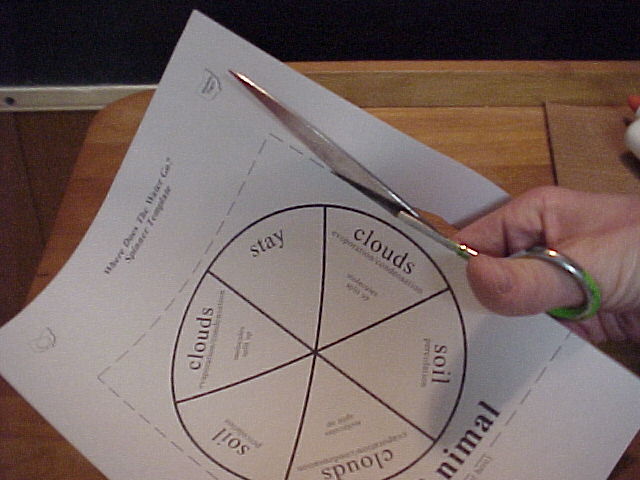
                          Spinner is a virtual manipulative can be used to teach about chance and random choices.
    In my first practicum I had this chance to teach Math for grade 8 students from the second day .I taught chapter 4 (Fractions)and chapter 5(Probabilities)from their text book.
    In the probabilities I used some math manipulative to help students to understand the lesson better, one of them was spinner .
    I got that most of the students never seen the real spinner so I  prepared some and use them in the class.First day I gave each student one spinner and ask them watch it as a toy and do what ever that you in 5 minutes.


    After 5 minutes when I felt that they are ready for new lesson ,I started.I prepared some small printed paper.In those small paper ,which they were in the same size as real spinner, I divided a circle to 5 sections and marked each section  as the first letter of colours.For example O as orange or Y as yellow .
    I asked them to put this paper under their spinners an spin it .After turning briefly ,it stops in one of the coloured regions and each student should answer these questions: 
    What is the probability of spinning Red?1/5
    What is the probability of spinning Blue or Green? 2/5
    What is the probability of spinning any colour?1
    What is the probability of spinning Black?(Black was not in the colours)0/5=0
    How many possible out comes are there?5


    For the second part,I asked each student change spinner regions' name.What ever that they want .like names of week days,car brands ,foods..and ask the fiend beside each other.


    For the last part change the size of spinner like change it to 4 or more sections.